- Home
- Blog
- The Honest Guide to Window Film: What Every Property Owner Should Know Before Hiring a Contractor
The Honest Guide to Window Film: What Every Property Owner Should Know Before Hiring a Contractor
Understand the key differences between DIY and professional window film installations, how to choose a reliable contractor, and protect your investment.
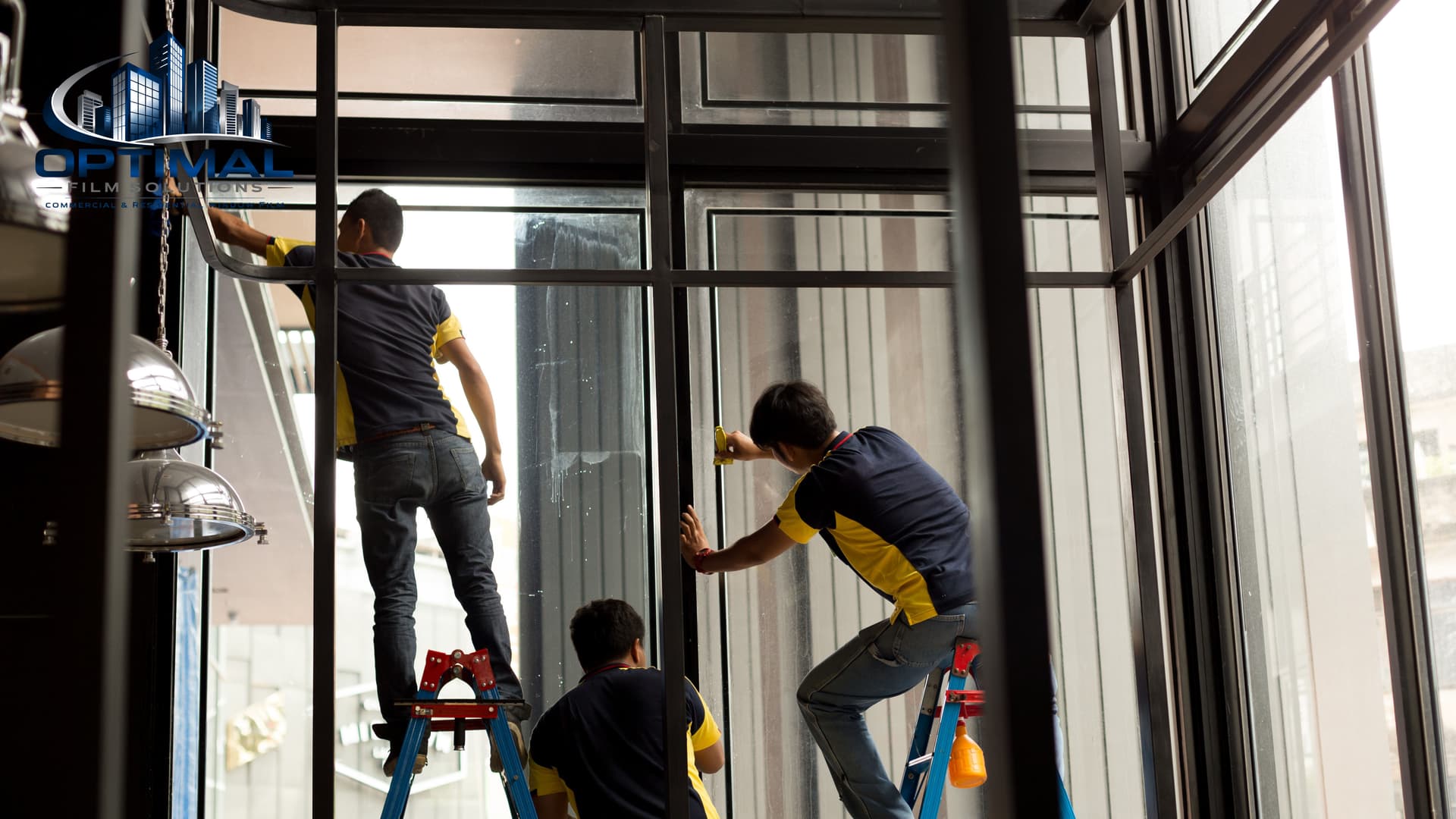
Insider insights from Noah Tucker, Owner of Optimal Film Solutions
Why I'm Writing This
After 5+ years in the window film industry, I've seen too many property owners make expensive mistakes—either by choosing the wrong contractor, selecting inappropriate film, or attempting DIY installations that cost more to fix than professional work would have originally.
This guide isn't a sales pitch. It's the educational resource I wish every client had before starting their project. Whether you choose Optimal Film Solutions or another qualified contractor, my goal is ensuring you make an informed decision that protects your investment.
Section 1: The Critical Difference Between DIY and Professional Installation
The DIY Reality Check
DIY window tinting kits typically cost $100-$200 for automotive applications or $2-$5 per square foot for residential films . The upfront savings are real—but so are the risks.
Common DIY Failures:
● Bubbling and creasing: Even microscopic dust particles create visible defects under film
● Improper adhesion: Temperature and humidity requirements are precise; most DIYers lack environmental control
● Measurement errors: Film cut incorrectly is film wasted—no returns on opened packages
● Voided warranties: Manufacturer warranties require authorized dealer installation
The Professional Advantage:
Professional installers complete jobs in 2-4 hours with results lasting 10-15 years, while DIY applications typically last 1-3 years before peeling, fading, or bubbling .
Industry-grade ceramic and spectrally selective films—offering 80%+ heat rejection—aren't available in consumer kits .
My Recommendation: For small decorative projects, DIY can work. For solar control, security, or UV protection, professional installation pays for itself within 2-3 years through energy savings alone .
Section 2: How to Vet a Window Film Contractor
The window film industry has a low barrier to entry—meaning companies come and go quickly, and inexperienced installers create problems that manifest years later . Here's your vetting checklist:
Verify Credentials
Requirement | Why It Matters | Red Flags
Licensed Contractor | Required for jobs over $500 in most states; ensures bonding and insurance protection | Unlicensed operators, "handyman" status only
Manufacturer Authorization | Reputable brands (3M, Llumar, Vista, Huper Optik) require dealer certification; protects your warranty | "We use whatever's cheapest," no brand affiliation
BBB Accreditation | Shows history of complaint resolution and business stability | Multiple unresolved complaints, recent name changes
Insurance & Bonding | Protects you if workers are injured or property is damaged | "We're fully insured" without proof, no bonding
Demand Documentation
Before signing, request:
1. Product specifications with energy performance data (TSER, VLT, UV rejection percentages)
2. Warranty terms in writing—both manufacturer and installation warranties
3. Reference list of similar completed projects
4. Proof of license and insurance certificates
5. Detailed scope of work explaining surface prep, installation process, and timeline
Critical Warning: If a contractor won't discuss thermal stress, seal failure risks, or glass compatibility, they lack technical knowledge that could damage your windows . Certain films shouldn't be installed on specific glass types—this isn't opinion, it's physics.
Section 3: Understanding Warranties (The Fine Print Matters)
Manufacturer vs. Installation Warranties
Manufacturer warranties typically cover:
● Delamination, bubbling, cracking, peeling
● Demetallization or discoloration
● Duration: 5-15 years for residential, 10-20 years for premium commercial films
Installation warranties cover:
● Workmanship defects (bubbles, creases, misalignment)
● Edge lifting or adhesion failures
● Duration: Should match manufacturer warranty
Common Exclusions (Read Carefully)
Most warranties do NOT cover:
● Fading or color change from sun exposure (normal wear)
● Damage from abrasive cleaning materials
● Accidental damage, vandalism, or severe weather
● Improper maintenance
FormulaOne's No-Fault Warranty (industry gold standard) covers one-time replacement for physical damage from accidents or vandalism—but requires specific warranty stickers and dealer participation .
My Advice: If a contractor offers a "lifetime warranty" without specifying what's covered, ask direct questions. Vague promises indicate either inexperience or intentional obfuscation.
Section 4: The Installation Process—What Professional Work Actually Looks Like
Understanding proper installation helps you evaluate contractor quality. Here's the process Optimal Film Solutions follows:
Phase 1: Assessment & Preparation (30-60 minutes)
● Glass type identification (annealed, tempered, laminated, Low-E coated)
● Frame condition evaluation
● Measurement verification with ½" overlap allowance
● Environmental control (temperature 40-90°F, humidity <80%)
Phase 2: Surface Preparation (Critical Step)
● Razor blade scraping to remove contaminants
● Chemical cleaning with pH-neutral solutions
● Final wipe with lint-free cloths and slip solution
● One grain of sand ruins the entire application
Phase 3: Film Application
● Release liner removal with simultaneous wetting
● Positioning with "slip" solution allowing micro-adjustments
● Squeegee technique working center-to-edges, overlapping strokes
● Edge sealing and moisture evacuation
Phase 4: Curing & Final Inspection
● Initial tack in 24-48 hours
● Full cure in 30 days
● Final inspection for bubbles, debris, or edge lifting
● Warranty documentation and care instructions
Time Investment: Professional teams complete 1,000-1,500 square feet daily with two installers . A typical residential home requires 4-6 hours; commercial projects scale accordingly.
Section 5: Cost Transparency—What You Should Actually Pay
2024 Pricing Structure
Film Type | Cost Per Sq. Ft. | Best For | Lifespan
Dyed (Economy) | $5.50 - $7.50 | Basic privacy, tight budgets | 5-7 years
Metallic/Carbon | $7.50 - $11.00 | Heat rejection, durability balance | 8-12 years
Ceramic/Premium | $11.00 - $16.00+ | Maximum heat rejection, clarity | 15+ years
Total Project Costs:
● Residential: $1,000 - $2,500 complete home
● Commercial: Varies by square footage and film selection
Labor adds $2-$5 per square foot .
The "Too Good to Be True" Warning
Bids substantially below market rates indicate:
● Unlicensed operation (no insurance/bonding)
● Substandard film (dyed film sold as ceramic)
● Rush jobs skipping critical prep steps
● "Fly-by-night" operations that won't honor warranties
Remember: The cheapest bid often becomes the most expensive project when rework is required.
Section 6: Red Flags That Should Send You Running
Based on industry experience, these are immediate disqualifiers:
1. "We can tint any window" without asking about glass type or age
2. No physical address or only PO Box contact
3. Cash-only pricing without written contracts
4. "Today only" discounts creating artificial urgency
5. No discussion of thermal stress or glass compatibility
6. Inability to provide manufacturer warranty cards
7. No local references or portfolio of completed work
Conclusion: Making Your Decision
Quality window film installation is an investment, not an expense. With proper selection and professional installation, you should expect:
● 25-30% cooling cost reduction
● 99% UV blocking protecting health and furnishings
● 10-15 year service life with comprehensive warranties
● 2-3 year payback period through energy savings
Whether you choose Optimal Film Solutions or another qualified contractor, use this guide as your evaluation framework. The lowest bid rarely delivers the best value—but the most informed decision always does.
I'm available to answer questions about your specific project, even if you're comparing multiple contractors. Education builds better outcomes for everyone.
Noah Tucker
Owner, Optimal Film Solutions
📞 270-970-2634
📧 optimalfilmsolutions@gmail.com
Licensed, insured, and manufacturer-authorized for premium film lines
References
: Skin Cancer Foundation. "UV Window Film & Tint." https://www.skincancer.org/
: Octint Solutions. "Home Window Tint vs Solar Film." https://octintsolutions.com/
: Access Protection. "Complete Guide to Commercial Solar Window Films." https://accessprotection1.com/
: Meridian Window Tint. "How Commercial Window Tinting Pays for Itself." https://meridianwindowtint.com/
: Lowe's. "How to Apply Window Film." https://www.lowes.com/
: A5 Tint. "DIY vs Professional Tint Installation." https://www.a5tint.ca/
: WindowFilm.com. "Home Window Film Installation Guide." https://windowfilm.com/
: Masters Car Stereo. "DIY vs. Pro Installation." https://www.masterscarstereo.com/
: Puri Tint. "Window Tint Warranty & Insurance Guide." https://www.puritint.com/
: ClimatePro. "How to Pick a Window Tint Company." https://f.hubspotusercontent10.net/
: Tint Guy. "Our Window Film Warranty." https://www.tintguy.com/
: Southern Tint. "Making Sense of Window Tinting Warranties." https://southerntint.com/
: Automotive Specialty Wraps. "DIY vs. Professional Window Tinting." https://www.automotivespecialtywraps.com/
: Buy Decorative Film. "Warranty Policy." https://buydecorativefilm.com/
: Signs101 Forum. "Solar Windows Film Installation." https://www.signs101.com/